Why resin driveways go green — and how to stop it coming back
7 min read Resin Revive
That green film on a resin drive is almost never the resin failing. It is algae feeding on damp and shade, and once you understand why it settles where it does, keeping it off becomes straightforward.
It is the single most common thing we are called out for. A resin-bound drive that looked sharp for its first few years starts to green over — usually along one edge, under a tree, or across the half that never gets the sun. Owners often assume the surface is breaking down. In almost every case it is not.
What the green actually is
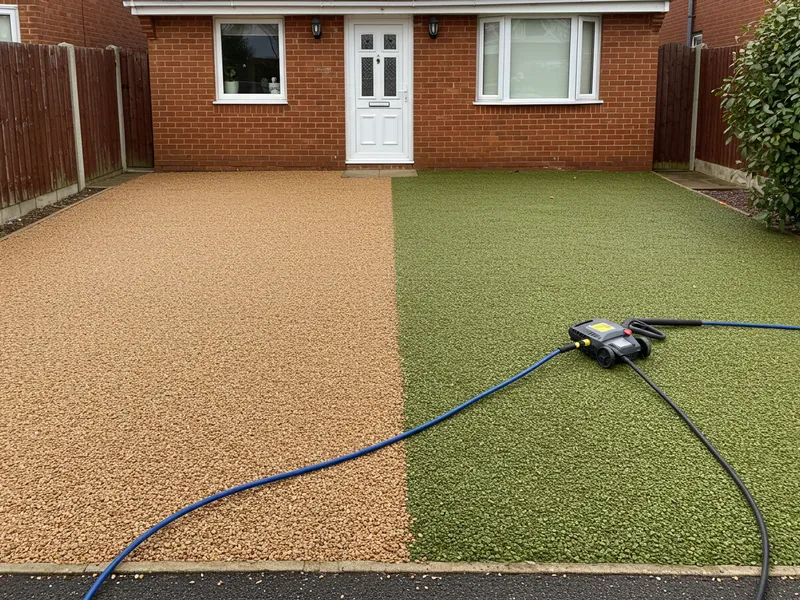
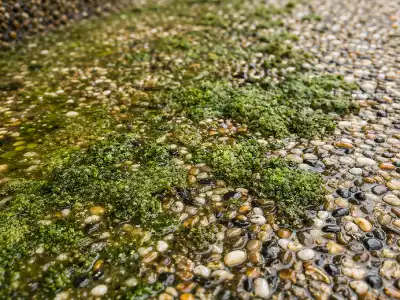
The green film is algae, sometimes with moss following behind it. Algae needs three things: moisture, shade and something to cling to. A resin-bound surface offers all three rather generously. It is permeable by design, so water passes through it instead of running off, and that open texture holds a little moisture near the surface for far longer than a sealed slab would. In a Yorkshire climate, where a wet fortnight is unremarkable, that is plenty.
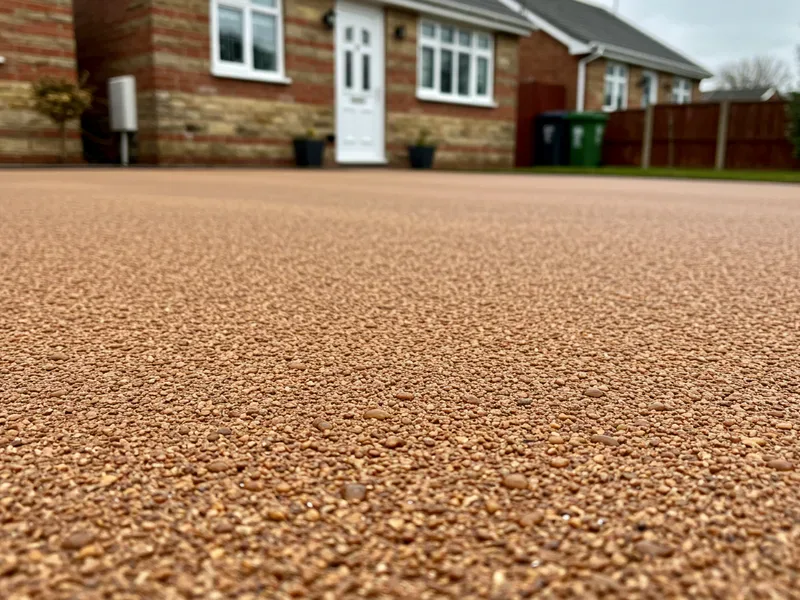
This is worth being clear about: permeability is a feature, not a fault. It is why resin drives do not pool water, why they cope with heavy rain, and why they generally satisfy drainage requirements without a soakaway. The same property that makes the surface perform well is the one that makes it hospitable to algae. You are not choosing between them.
Why it always appears in the same places
Look at where the green sits and you can usually read the cause off the drive itself.
- North-facing and shaded strips dry slowly, so they stay damp longest.
- Edges against a wall, fence or hedge get less airflow and less direct sun.
- Under trees you get shade plus a steady fall of organic matter, which is effectively fertiliser.
- Low spots and the base of a slope hold water a little longer than the rest of the surface.
If the green is spread evenly across an open, sunny drive, that is unusual and normally points to something else — a failed edge detail letting water sit, or a build-up of fine silt that is holding moisture like a sponge.
What not to do
This is where most of the damage we repair actually comes from. Resin is tough, but it is not indestructible, and the wrong approach causes problems that the algae never would.
- Do not attack it with a turbo nozzle at full pressure. A pinpoint jet will strip resin from around the aggregate and leave you with loose stone. What starts as a cosmetic problem becomes a repair.
- Do not use household bleach. It can lighten the aggregate unevenly, and what runs off goes straight into your borders and the water table beneath a permeable surface.
- Do not use a wire brush. It scars the resin and the scratches hold dirt, so the drive looks worse sooner.
- Do not just wash it off and stop. Rinsing removes what you can see and leaves the spores behind, which is why it is back within weeks.
What actually works
A proper job is done in stages, and the treatment matters more than the pressure.
We start with a controlled clean using a flat surface cleaner rather than a pencil jet, at a pressure matched to the surface. That lifts the film and the dirt trapped in the texture without working the resin loose. Then — and this is the part that determines whether it comes back — the surface is treated with a biocide that kills the spores rather than simply displacing them. Skip that step and you are booking the same job again for next spring.
Where the surface has also dulled or lost stone, a recoat puts a fresh UV-stable resin layer over the top. That restores colour and, usefully here, re-binds the aggregate and gives the algae a less welcoming surface to settle on.
Keeping it off
Most of what keeps a resin drive clean is unglamorous and free.
- Clear leaves and debris in autumn rather than leaving them to rot in place.
- Cut back anything overhanging the drive to get light and air onto it.
- Brush the surface occasionally — it stops silt building up in the texture.
- Make sure gutters and downpipes are not discharging onto the drive.
Do that and a treated resin surface will typically stay clear for two to three years between professional cleans, rather than greening over every winter. If yours is greening annually despite all of the above, something structural is usually holding water and is worth looking at properly.
Common questions
- Will jet washing ruin my resin driveway?
- Not if the pressure and nozzle are matched to the surface. Damage comes from turbo or pencil nozzles held close to the resin, which strips it from around the aggregate. A flat surface cleaner at a controlled pressure is safe.
- How often does a resin drive need cleaning?
- With a proper biocide treatment, most drives need professional attention every two to three years. Without treatment, expect the green to return within a single season.
- Does the green mean my resin is failing?
- Almost never. Algae sits on top of a sound surface. It only becomes a structural issue if it is left for years alongside standing water.