How often should a resin driveway be recoated?
5 min read Resin Revive
There is no fixed schedule, and anyone quoting you one is guessing. What matters is what the surface is doing — and there are five signs that tell you it is time.
We get asked for a number. Every three years? Every five? The honest answer is that a recoat is driven by condition, not by the calendar, and two drives laid on the same day can need very different things depending on where they are and what they take.
That said, as a working range: most resin-bound drives in this part of the country benefit from a clean and recoat somewhere between year five and year eight. A shaded, north-facing drive under trees will want it sooner. A wide, open, south-facing drive that gets brushed regularly may go a good deal longer.
The five signs worth watching
1. The colour has flattened
The clearest signal. Compare an area that gets full sun with one that has been shaded or under a parked car for years. If there is an obvious difference, UV has been working on the binder and the surface has lost its depth. A recoat brings it back.
2. Stone is coming loose
Ongoing aggregate loss well beyond the first year means the binder is releasing its grip. A recoat re-binds the surface. Left alone, the loss accelerates, and the gaps let water into the base.
3. Water no longer drains the way it did
If puddles now sit where they never used to, the pores have silted up with fine dirt and organic matter. Sometimes a deep clean is enough to open the surface again. If the texture is also worn, a clean and recoat is the better answer.
4. Stains stay put
A healthy sealed surface sheds most spills. When leaf marks, oil and general grime start soaking in and staying, the protective layer has thinned.
5. It feels rougher underfoot
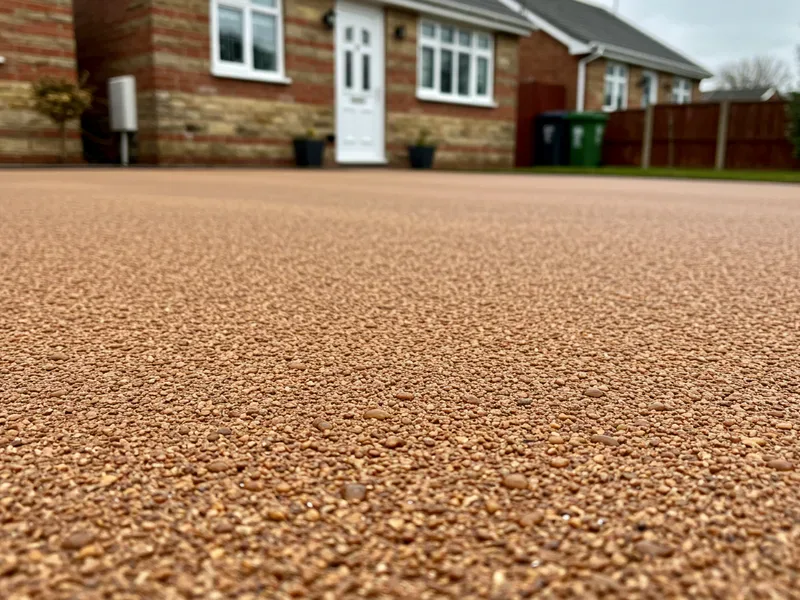
Run a hand over it. A surface that has gone noticeably coarse and open, where it used to be smooth and even, has lost binder from the top.
What a recoat actually is
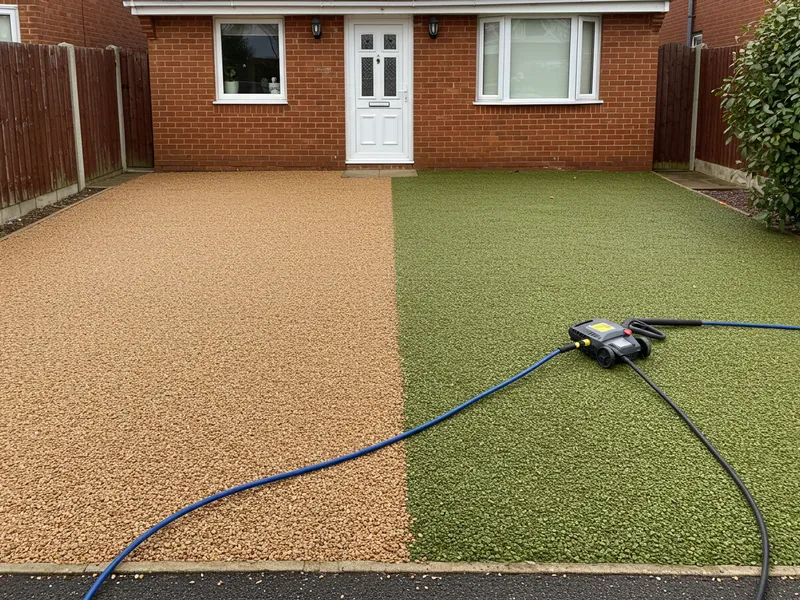
It is not a paint job and it is not a relay. The drive is cleaned thoroughly and treated for organic growth, any loose or damaged areas are made good, and then a fresh UV-stable resin layer is applied across the surface. That layer soaks into the existing texture, re-binds the aggregate, restores colour and depth, and re-seals against weather and staining.
Done at the right point, it takes a tired drive back to something close to how it looked when it was laid, and it resets the clock on wear. Done too late — after water has been getting into the base for several winters — it is patching over a problem that needs proper repair first.
The economics of not waiting
This is the part worth being blunt about. Recoating a sound resin drive is a maintenance job. Relaying a failed one is a construction job, and the difference in cost is substantial. The window between the two is measured in winters, and every one where water is getting into the base through loose aggregate moves you closer to the expensive end.
If your drive is showing two or more of the five signs above, it is worth an assessment. Ours are free and we will tell you if it does not need doing yet — there is no sense recoating a surface that has years left in it.
Common questions
- How long does a resin recoat last?
- A quality UV-stable recoat on a sound surface typically holds for five to eight years, depending on exposure, traffic and how well the drive is kept clear.
- Can any resin driveway be recoated?
- Most can, provided the base and the bulk of the surface are sound. Areas that have failed structurally need cutting out and relaying first.
- Is recoating cheaper than a new driveway?
- Considerably. It is a maintenance job rather than a construction one, which is why acting while the surface is still sound matters.