Resin bound or resin bonded? How to tell what you have
5 min read Resin Revive
They sound like the same thing and they are not. One is smooth and permeable, the other is textured and sealed — and treating one like the other is how surfaces get damaged.
Almost every homeowner we meet says "resin driveway" and means one of two quite different surfaces. It matters, because they wear differently, fail differently and are cleaned differently.
Resin bound
Aggregate and resin are mixed together in a forced-action mixer, then trowelled onto the base as one material. Every stone is coated in resin before it is laid.
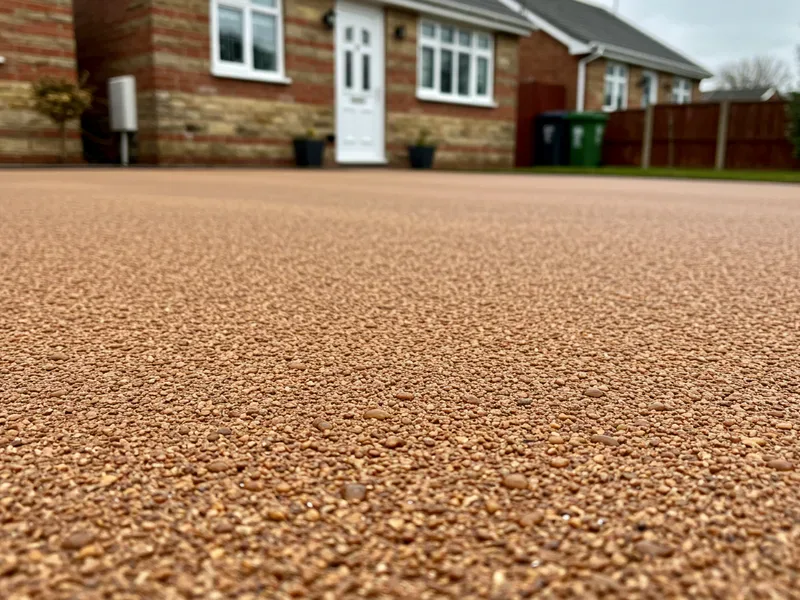
The result is smooth underfoot, closer to a flat surface than a gravel one, and permeable — water passes through it rather than running off. That permeability is the main selling point: it drains well and generally satisfies planning requirements for surface water without a soakaway.
Resin bonded
Resin is applied to the base first, then dry aggregate is scattered onto it and sticks to the top. Only the bottom of each stone is bonded.
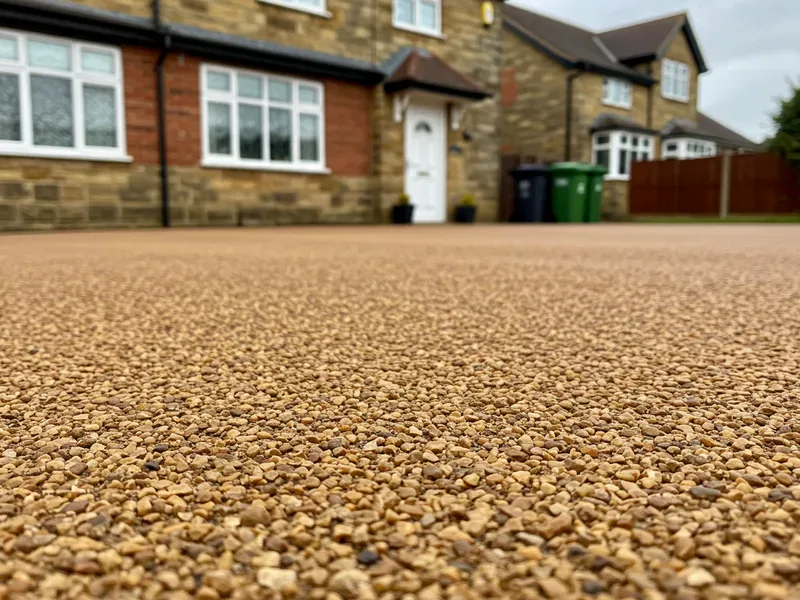
The result is textured, closer to loose gravel to look at and to walk on, with more grip. It is not permeable — water runs off it, so it needs falls and drainage designed in. It is often chosen for slopes and ramps precisely because of the grip.
Three checks that settle it
- Run your hand over it. Bound is comparatively smooth and even. Bonded feels sharp and loose-textured, like coarse sandpaper.
- Pour water on it. On bound, it soaks straight through. On bonded, it sits and runs to the edge.
- Look at the edge. Bound is laid thicker, typically around 15 to 18mm, and you can usually see that depth at a kerb or gully. Bonded is a thin scatter over the base.
Why it changes the maintenance
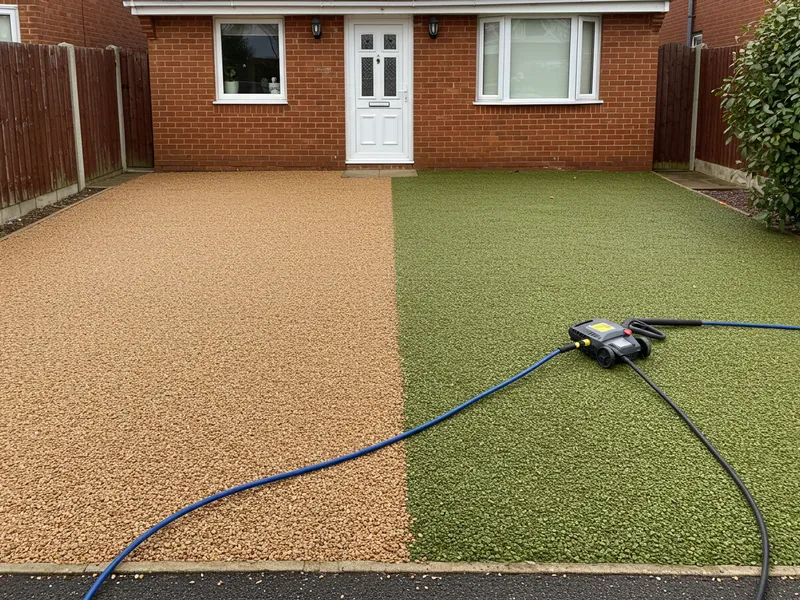
Bound surfaces hold moisture in the open texture, so algae is the common complaint. They can be recoated with fresh resin to re-bind aggregate and restore colour. Cleaning has to be at controlled pressure — a narrow jet strips resin from around the stone and produces exactly the loose aggregate people call us about.
Bonded surfaces shed stone as the surface layer wears, because only the underside of each stone was ever held. Loss is normal in small amounts and expected over time. Pressure washing a bonded drive aggressively will take a lot of stone off very quickly.
The practical upshot: the same pressure setting that is safe on one can damage the other, and a recoat means different things on each. If you are getting a quote and the person looking at your drive does not say which you have, that is worth noting.
Which is better?
Neither, in the abstract. Bound is the usual choice for driveways and patios where a smooth, permeable, low-maintenance finish is wanted. Bonded suits slopes, ramps and anywhere grip matters most, and it costs less to install.
Both restore well when they are looked after. Both suffer if someone attacks them with a turbo nozzle. If you are unsure which you have, we will tell you at the assessment — it takes about thirty seconds to establish.
Common questions
- Can resin bonded be made permeable?
- No. Resin is applied to a sealed base and the stone sits on top, so water runs off. Only resin bound is permeable.
- Does resin bonded lose more stone than resin bound?
- Yes, and it is normal. Only the underside of each stone is bonded, so surface stone works free over time.
- Can both be recoated?
- Both can be restored, but the process differs. Resin bound takes a fresh resin coat that re-binds the aggregate; bonded is re-dressed differently.