Loose stones on a resin driveway: what causes them and what it takes to fix
6 min read Resin Revive
A scatter of loose aggregate is the most misread symptom on a resin drive. Sometimes it is nothing. Sometimes it is the surface telling you the bond is going. Here is how to tell them apart.
You sweep the drive and there is a small pile of stone in the dustpan. A few weeks later, the same again. Loose aggregate is one of the most common things owners ask us about, and the honest answer is that it depends entirely on how much, from where, and how long it has been happening.
The kind that does not matter
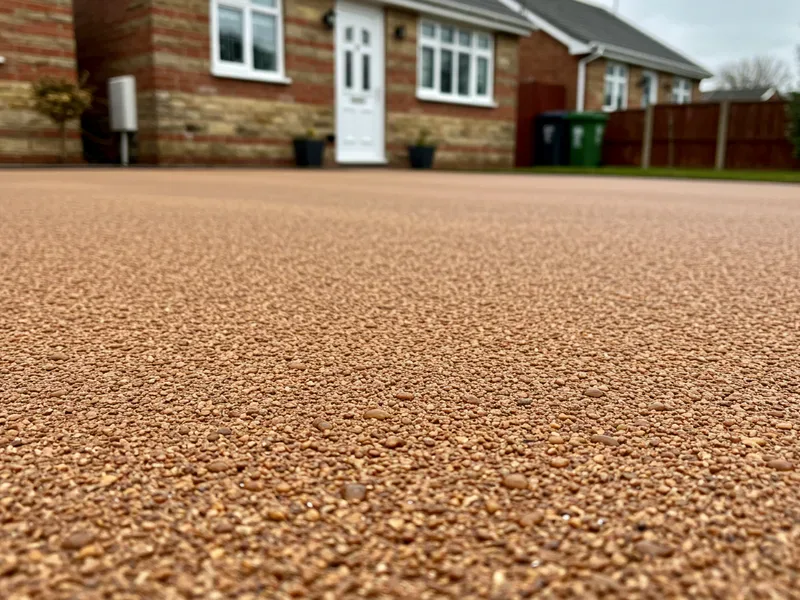
A newly laid resin-bound drive will shed a small amount of stone in its first few months. During installation, some aggregate at the very surface sits proud of the resin and was never fully encapsulated. Traffic and brushing knock it free. This is normal, it is finite, and it stops.
You will also see a little loss along cut edges and around gullies, where the surface was trimmed to fit. Again, this is cosmetic and self-limiting.
The kind that does
Loss becomes a symptom worth acting on when it is ongoing, spreading, or concentrated in patches. That points at the resin binder rather than at stray surface stone, and there are a few usual causes.
UV and weathering
Resin binders degrade slowly under ultraviolet light. Cheaper non-UV-stable systems go first, often yellowing before they fail. As the binder embrittles it loses grip on the aggregate, and stone starts releasing across the whole surface rather than at the edges.
A poor mix or a bad day
Resin-bound is mixed on site, and it is unforgiving. Too little resin for the volume of stone, a forced-action mixer run short, or laying in the wrong conditions will all produce a surface that never bonded properly. Laying in the cold or onto a damp base is a particularly common cause. Failure usually shows within the first couple of years and often in bands, matching the batches as they were laid.
Water getting underneath
If water reaches the base and cannot drain, freeze-thaw will lift the surface from below. This shows as a soft or hollow-sounding patch, sometimes with a slight dish or crack, and loose stone gathering right around it.
How to work out which you have
- Age. Under six months and slowing? Almost certainly settling-in. Three years in and getting worse? Binder.
- Pattern. Even loss across the whole drive suggests UV degradation. Distinct patches suggest mix or base problems.
- Sound. Tap a suspect area with a knuckle. A hollow note means the surface has separated from what is beneath it.
- Colour. Yellowing alongside stone loss is a strong sign of a non-UV-stable binder reaching the end of its life.
What the repair involves
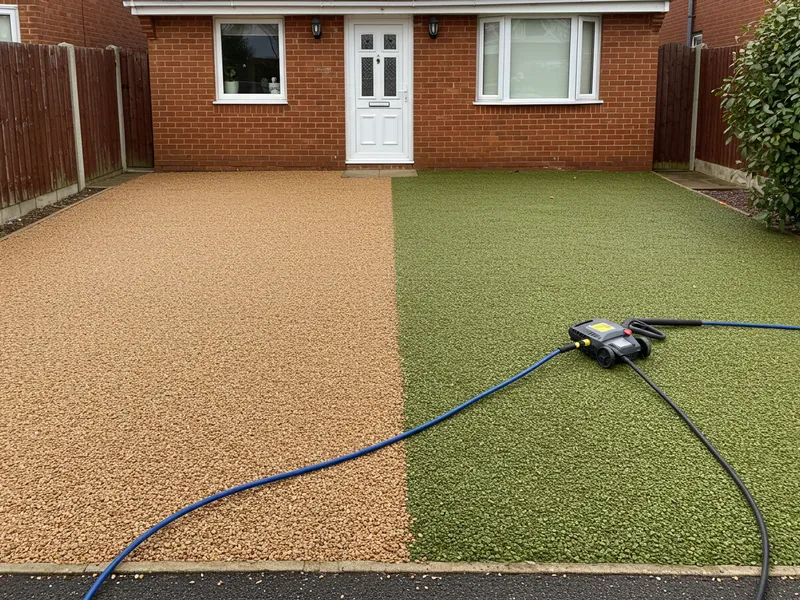
Where the base is sound and the loss is surface-level, a recoat is usually enough. The drive is cleaned thoroughly, treated for any organic growth, and a fresh UV-stable resin layer is applied over the existing surface. That re-binds loose aggregate, restores the colour and seals the texture again. It is a fraction of the cost of relaying and, done at the right point, it buys years.
Where a patch has failed structurally, that section needs cutting out and relaying before anything goes over the top. Recoating over a hollow area only hides it, and it will come back through.
The thing worth saying plainly: acting early is much cheaper. A drive that is shedding stone but otherwise sound is a recoat. The same drive left three more winters, with water getting into the base through the gaps, can become a relay. If yours has started losing stone, it is worth getting an honest look at it before the next winter rather than after.
Common questions
- Is it normal for a new resin driveway to lose stones?
- Yes, a small amount in the first few months is normal as surface aggregate that was never fully bound works free. It should reduce steadily and stop.
- Can loose stones be fixed without relaying the drive?
- Usually. If the base is sound, a recoat re-binds the aggregate and restores the surface at a fraction of the cost of relaying.
- How do I know if the base has failed?
- Tap the area. A hollow sound, a soft feel underfoot or a slight dip means the surface has separated from the base and needs cutting out rather than recoating.